
Crawlspace Encapsulation
Crawlspace Conditions That Affect the Whole House
Crawlspace encapsulation in Cary for homes with moisture intrusion, exposed ground liner, or compromised vented crawlspaces
A significant share of homes built in Cary through the 1990s and into the early 2000s were constructed with vented crawlspaces and unsealed ground liners—a standard approach at the time that left the space exposed to ambient air movement and direct ground contact. Reliant Pest Management performs crawlspace encapsulation for homeowners in Cary whose crawlspaces show signs of moisture accumulation, deteriorating insulation, wood staining, or biological growth on structural members. The work converts the crawlspace from a semi-open, exposed area into a sealed, controlled environment that behaves as part of the conditioned building envelope.
Encapsulation involves removing deteriorated existing liner material, preparing the crawlspace floor and perimeter walls, and installing a reinforced vapor barrier—typically 12- to 20-mil polyethylene sealed at all seams and mechanically fastened at the perimeter footing. Vents that previously communicated with outside air are sealed as part of the process, and depending on the crawlspace's moisture load, a dehumidification system or drainage solution may be incorporated. Each of these steps interacts with the others: sealing vents without controlling residual moisture, for example, traps the problem rather than resolving it, which is why the inspection phase drives the scope of work.
Schedule a crawlspace evaluation to identify exactly what conditions are present and what the encapsulation scope would involve for your property.
What Proper Crawlspace Encapsulation Requires
The preparation work before the liner goes down determines how long the encapsulation holds up. Existing debris, old insulation that has fallen from the joists, and deteriorated prior liner material are removed first, because leaving compromised materials in place creates voids under the new barrier where moisture continues to concentrate. Wall surfaces and the footing ledge are inspected for structural concerns—any active water intrusion at the foundation wall has to be addressed before the liner is sealed against it, or the barrier becomes a collector rather than a barrier.
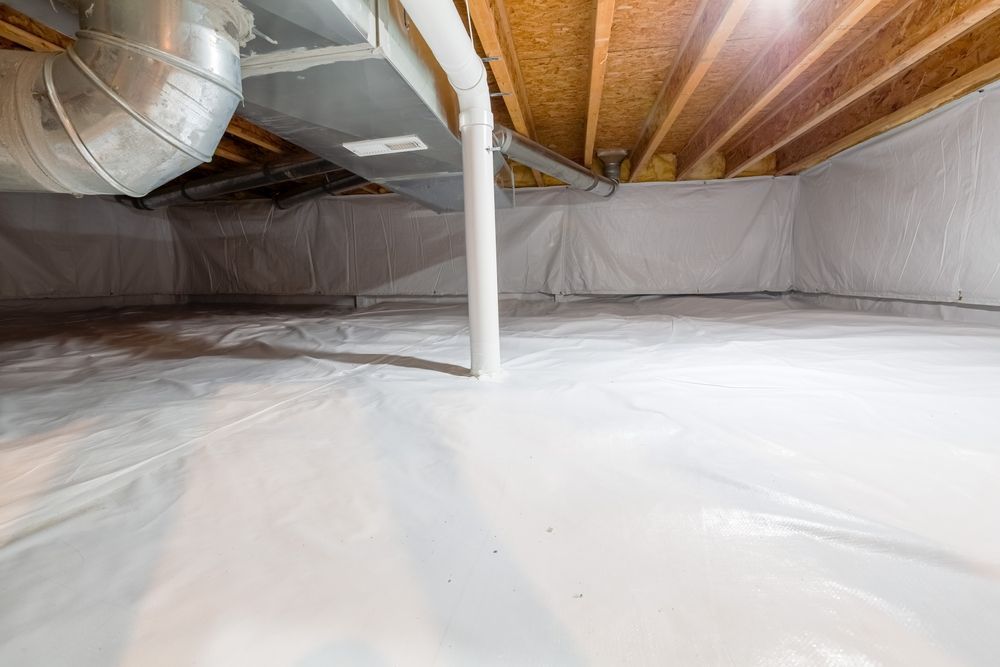
Once the encapsulation is complete, the crawlspace floor presents a clean, continuous white or silver surface with sealed seams, and any pier bases or support columns are wrapped as part of the installation. Homeowners who access their crawlspace after the work is done notice the absence of the musty odor that typically characterizes a vented, open-ground crawlspace, and insulation that was previously falling or displaced sits correctly because the conditions driving its deterioration have changed. Reliant Pest Management documents the condition of structural members during the process, which gives homeowners a baseline record of what the space looked like before and after the work.
Crawlspace encapsulation also changes what pests find when they access the space—sealed, dry conditions are less hospitable to wood-destroying insects and rodents that use moisture-damaged insulation for nesting. Whether a dehumidifier is included in the scope depends on the crawlspace's cubic footage, existing ventilation configuration, and how much moisture was present during inspection, so that decision is made based on actual measurements rather than a standard package applied to every property.
Answers About How the Work Is Done
Older vented crawlspace designs common in Cary's established neighborhoods create conditions that encapsulation directly addresses. These questions cover how the process works and what property owners should understand before the work begins.
What happens to existing crawlspace vents during encapsulation?
Existing foundation vents are sealed as part of the encapsulation process, typically using rigid foam insulation and a mechanical cover, because open vents in an encapsulated crawlspace introduce uncontrolled air that undermines the sealed environment the liner creates. Sealing them is a required step, not optional.
How is the vapor barrier material selected and what differentiates barrier quality?
Barrier thickness is measured in mils, and a reinforced 12-mil minimum is generally considered the threshold for a durable installation in a residential crawlspace. Thinner liners puncture more readily during routine access, which compromises the sealed surface over time. Seam tape and perimeter fastening method also affect longevity—tape-sealed seams with mechanical perimeter fasteners outperform overlapped, unfastened seams.
Why does old insulation in the crawlspace need to be removed before encapsulation?
Fiberglass batt insulation installed against floor joists in an open crawlspace absorbs moisture over time and loses its rated R-value as it compresses and falls. Encapsulating over fallen or saturated insulation traps the moisture load it carries and leaves a breeding environment for mold beneath the new liner, which defeats the purpose of the installation.
What conditions in a Cary crawlspace indicate that a dehumidifier should be included?
Crawlspaces showing visible biological growth on joists, a relative humidity reading above 60 percent at inspection, or prior standing water events typically require active dehumidification alongside the liner installation. A liner alone controls ground moisture vapor, but a sealed space with residual elevated humidity still supports mold growth without mechanical drying.
How do you verify the encapsulation was installed correctly after the work is finished?
A correctly installed encapsulation shows no exposed ground surface, continuous sealed seams across the floor and up the perimeter walls, wrapped piers, and no visible daylight at vent locations. The crawlspace should be accessible without disturbing the liner at common entry paths, and there should be no sagging or pooling in the barrier surface.
Reliant Pest Management also performs crawlspace encapsulation in Apex, Morrisville, Holly Springs, and Fuquay-Varina. To get a clear picture of what your crawlspace currently needs and what the encapsulation process would involve, contact Reliant Pest Management to arrange an on-site evaluation of the space.
Protect Your Crawlspace
Don't let excess moisture continue affecting your crawlspace. Call Reliant Pest & Wildlife or request a callback to schedule your inspection.
984-326-2699
Request A Callback
We will get back to you as soon as possible.
Please try again later.
Call Us
Our Location
167 East Chatham St,
Cary, NC
