Wildlife Exclusion
Gaps That Let Wildlife Into Your Home
Wildlife exclusion in Cary for homes with active entry points, attic intrusions, or recurring animal access
Reliant Pest Management performs wildlife exclusion for homeowners in Cary who are dealing with animals getting inside walls, attics, crawlspaces, or soffits. The work is not trapping and removal alone—it is the systematic identification and sealing of every structural gap an animal uses to enter, so that intrusion does not repeat once the animal is gone. A home that has had squirrels or raccoons in the attic almost always has at least one secondary entry point that goes unnoticed until the next animal finds it.
The exclusion process begins with a perimeter inspection that maps every gap, void, or compromised material along the roofline, foundation, fascia, and utility penetrations. Entry points are not always obvious—gaps at pipe chases, soffit returns, and ridge vent ends are common access routes that standard visual checks miss. Once all points are identified, each is sealed with materials appropriate to its location and the pressure animals apply: hardware cloth, galvanized flashing, and caulking-grade sealants are chosen based on whether the gap is structural, utility-related, or material-related.
Arrange an on-site inspection to map active and potential entry points on your property..
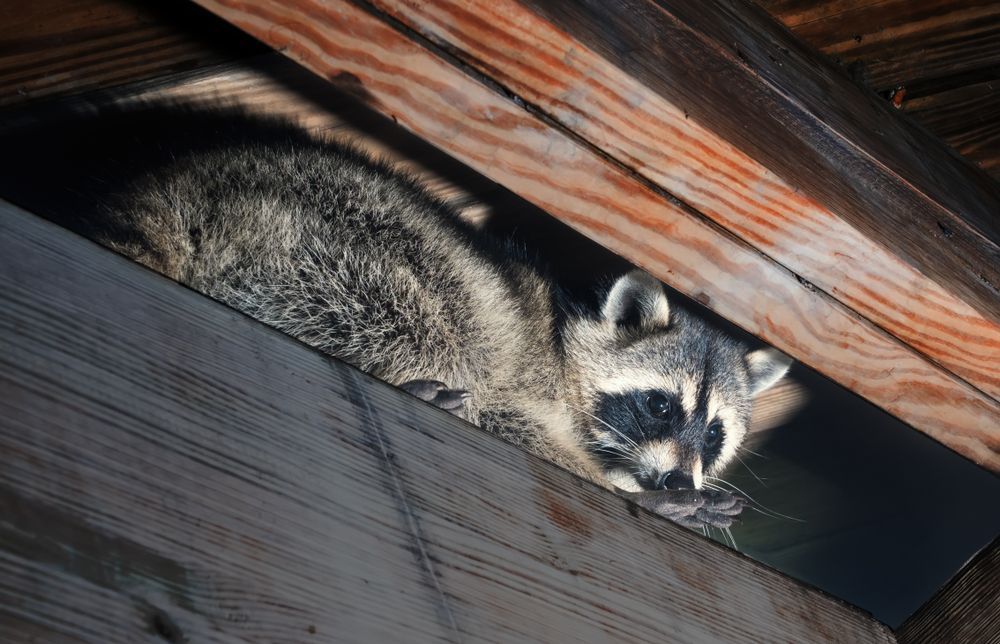
How Wildlife Exclusion Stops Recurring Intrusions
What separates a durable exclusion from a temporary fix is the sequencing of the work. Animals cannot be sealed inside the structure, which means the process requires confirming that the interior is clear—through inspection, one-way doors where needed, or a monitored waiting period—before final closure of primary entry points. Skipping that step results in animals dying inside walls or chewing new exits, which creates additional damage and odor problems. Reliant Pest Management follows a close-out sequence that confirms the space is vacated before permanent sealing is completed.
After the work is finished, you will notice that sounds of movement in the attic or walls stop, and that areas that previously showed daylight through gaps or had displaced insulation are closed and secured. Hardware cloth installations are flush and mechanically fastened rather than stapled loosely, which matters because animals test exclusion material repeatedly and will exploit any section with give. The visible change at each sealed point is a sign of correct installation, not just cosmetic patching.
Exclusion work also involves assessing what damage the animals left behind—soiled insulation, compressed nesting material, or gnawed wiring—because those conditions affect whether the attic or crawlspace functions correctly after the animals are gone. Addressing the structural entry points without evaluating interior damage leaves the underlying problem partially unresolved, and that distinction matters when deciding what follow-up steps a property actually requires.
What Property Owners Ask About the Work
Cary's mix of established subdivisions and newer construction means exclusion work varies considerably depending on how a home was built and what materials were used at the roofline and foundation. These questions address how the process works in practice.
What does a wildlife exclusion inspection actually cover?
The inspection covers the full perimeter of the structure at ground level and roofline, including all utility penetrations, soffit intersections, ridge vents, fascia board joints, and foundation gaps. Interior spaces like attics and crawlspaces are also checked for nesting evidence, entry direction, and secondary pathways animals use once they are inside.
How is the vapor barrier material selected and what differentiates barrier quality?
One-way exclusion devices are installed at primary entry points and left in place for a monitoring period, allowing animals to exit but not re-enter. Secondary points are sealed during this period, and primary points are permanently closed only after the monitoring period confirms the interior is clear.
What materials are used to seal entry points and why do they vary?
Material selection depends on the gap type and location. Hardware cloth rated at a minimum of 16-gauge is used at vents and large openings where animals apply sustained pressure. Galvanized flashing is used at roofline intersections where material flex is a factor. Caulk-based sealants address smaller utility gaps but are not appropriate as standalone closures where animals are actively testing the material.
Why do homes with prior animal intrusions often have the problem return?
Animals leave scent trails at entry points, and those trails attract new animals of the same or different species even after the original occupant is gone. A full exclusion addresses this by sealing all identified points rather than only the one where current activity was observed, which removes both the physical access and reduces the structural cues that draw animals back.
What should you look for to verify exclusion work was done correctly?
Correctly installed exclusion material sits flush against the surface, is mechanically fastened rather than surface-stapled, and shows no gaps at the edges where it meets adjacent materials. Inside the attic or crawlspace, there should be no visible daylight at any penetration point after the work is complete.
Reliant Pest Management works through wildlife exclusion methodically, starting with the inspection and finishing with documented closure of every identified entry point. Request a property assessment to get a clear picture of where your home is currently vulnerable.
Wildlife Removal Form - Reliant Pest & Wildlife
At Reliant Pest & Wildlife, we know unwanted critters disrupt your home. Fill out our form to reclaim your space, and our team will quickly address your concerns.
Request A Callback
We will get back to you as soon as possible.
Please try again later.
Call Us
Our Location
167 East Chatham St,
Cary, NC
