
Bat exclusion
Bat Colonies Require Scheduled, Regulated Removal
Bat exclusion in Cary for structures with confirmed bat roosting in attics or wall voids
Bat exclusion is a fundamentally different process from trapping or poisoning—bats cannot be killed or handled indiscriminately under North Carolina wildlife regulations, and the work must be sequenced around the state's defined maternity season, during which exclusion is prohibited because flightless pups would be sealed inside the structure. Reliant Pest Management performs bat exclusion using one-way devices installed at active roost entry points, allowing bats to leave the structure at dusk while preventing re-entry, followed by permanent sealing once the colony has vacated. The service is available to homeowners in Cary who have confirmed bat presence in an attic, wall void, or soffit cavity.
The process begins with identifying all active entry points—bats often use multiple gaps along the same roofline, and closing some while leaving others means the colony simply shifts rather than leaves. Entry points for bats are typically smaller than those used by raccoons or squirrels: gaps as narrow as three-eighths of an inch at a ridge cap joint, a dried sealant bead along a flashing edge, or a separation at the hip of a gable are sufficient for a bat to pass through. Scheduling is the other critical variable: Reliant coordinates exclusion work outside North Carolina's maternity season so that the one-way devices can be installed and the colony fully excluded before permanent sealing begins.
Connect with Reliant Pest Management to confirm whether your property's situation falls within an eligible exclusion window and to document the roost entry points before work is scheduled..
The Reliant Shield: Complete entry sealing with a warranty.
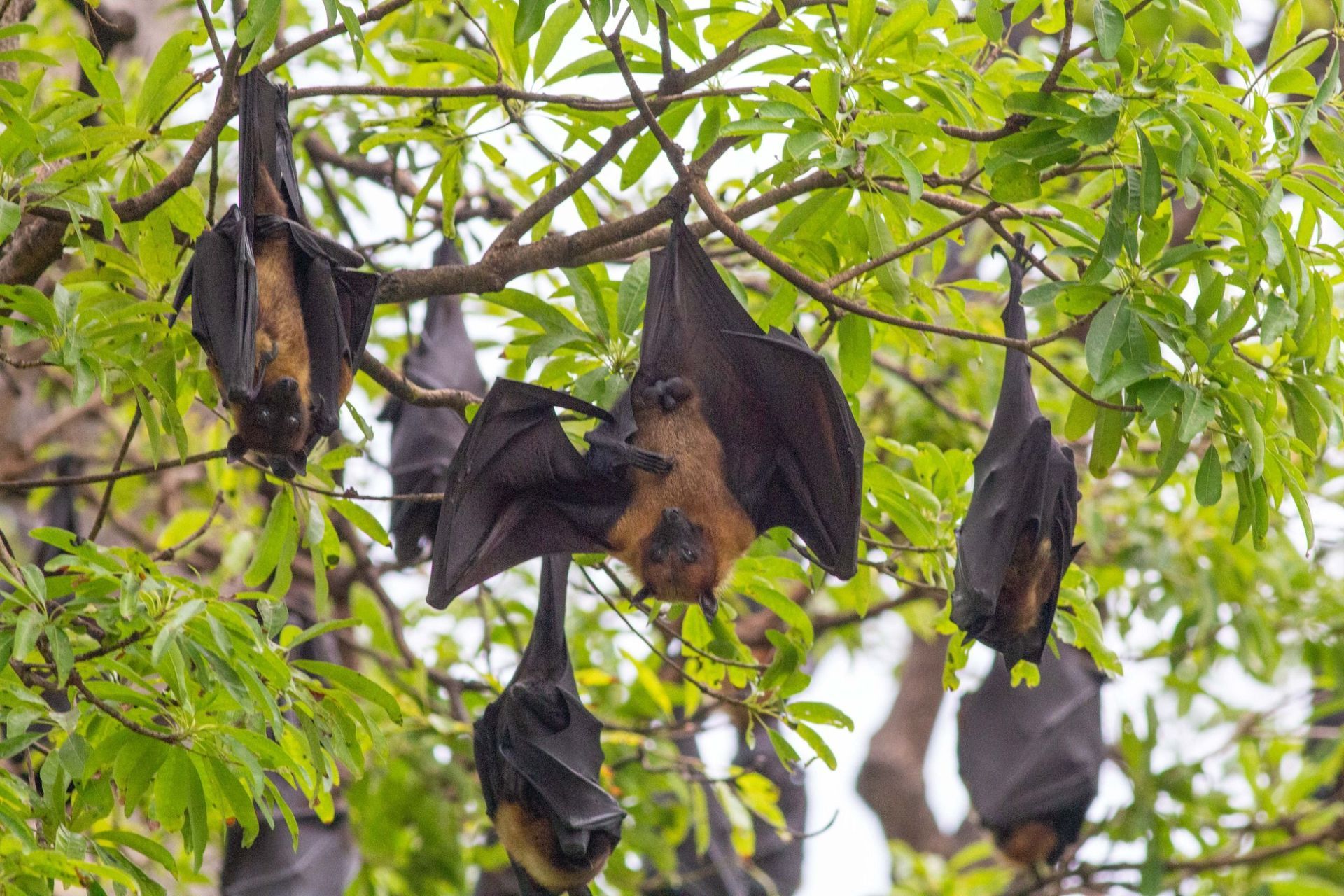
The Difference Between Exclusion Done Correctly and a Partial Fix
One-way exclusion devices work by allowing outbound travel through a tube or mesh cone while blocking the angle of return entry—bats exit at dusk, attempt to re-enter at the same point, and cannot navigate back through the one-way passage. The devices remain in place for a period sufficient for the entire colony to have completed its nightly exit cycle multiple times, at which point the colony is considered vacated and permanent sealing begins. Reliant Pest Management installs devices at every confirmed active entry point simultaneously; partial installation—covering some but not all openings—causes the colony to redistribute to unsealed gaps rather than vacating, which extends the timeline and leaves the job incomplete.
After exclusion and sealing are finished, the attic space no longer carries the ammonia odor associated with accumulated guano, the audible scratching and movement along roofline framing stops, and the entry gaps are closed with materials that match the existing roofline construction. The guano accumulation that remains after the colony vacates is a separate remediation item—exclusion stops the source, but the deposit itself is addressed through a distinct cleanup process that can be assessed once the space is safe to enter without active bat occupation.
Bat exclusion is priced from $1,800, which reflects the multi-phase nature of the work: entry point documentation, one-way device installation, monitoring the exclusion period, permanent sealing, and the regulatory compliance requirement of scheduling outside the maternity season. That sequencing cannot be compressed without violating the conditions that make the exclusion legal and effective.
Common Questions About This Service
Bat exclusion generates specific questions about timing, regulatory requirements, and the mechanics of the one-way device process—the answers below address those aspects of the work directly.
What is North Carolina's maternity season and why does it affect scheduling?
North Carolina designates a period during which bat exclusion is prohibited because female bats give birth and raise flightless pups during that window; sealing during maternity season would trap non-flying young inside the structure, which is both a regulatory violation and a practical problem.
How does a one-way exclusion device actually work?
The device—typically a mesh tube or cone—is fitted over the active entry point and allows bats to push through outward at dusk while the angle and material prevent them from finding the opening on return, causing them to relocate to a natural roost site over successive nights.
Why must all entry points be identified before devices are installed?
Installing one-way devices over some entry points while others remain open causes the colony to shift to the unsealed gaps rather than vacate; complete mapping of the roost access points is a prerequisite for the exclusion to work as intended.
How small can a bat entry point be, and how are those gaps found during inspection?
Bats in this region can pass through gaps as narrow as three-eighths of an inch; inspectors look at ridge cap joints, dried sealant lines, hip and valley intersections, and flashing edges where separation has occurred—areas that require close examination from ladder height to detect.
What happens to the guano deposit left in the attic after bats are excluded?
Exclusion removes the source of ongoing accumulation, but the existing deposit remains and requires separate remediation; once the attic is confirmed bat-free and sealed, the guano accumulation can be safely assessed and removed as a distinct scope of work.
Reliant Pest Management also performs bat exclusion in Apex, Raleigh, and Durham. To confirm your property's eligibility based on the current exclusion calendar and document the roost entry points on your roofline, call Reliant to arrange an inspection before the next exclusion window closes.
Call Us
Our Location
167 East Chatham St,
Cary, NC