Squirrel removal
Squirrels in the Attic Cause Structural Damage
Squirrel removal in Cary for attics and soffits with confirmed or suspected animal activity
A soffit panel pulled away at the corner, insulation compressed into a flat mat along a joist run, or the sound of movement directly above a ceiling—these are the conditions that bring most homeowners to call Reliant Pest Management for squirrel removal. The service covers extraction from attics and soffits followed by permanent sealing of the entry points animals used, so the same animals cannot return and no new ones can follow the same path in. Reliant operates across Cary, Apex, Raleigh, and Durham, handling both the removal and the structural remediation as a single scope of work.
Squirrel removal begins with confirming the active entry locations—typically the points identified during a prior inspection or assessed at the start of the job. From there, the removal method is matched to the situation: live trapping where access allows, exclusion devices where trapping would be impractical, and in either case a sealing sequence that closes the verified openings with materials animals cannot chew back through. In neighborhoods like Preston and Lochmere, where mature tree canopy runs directly adjacent to rooflines, squirrels have consistent aerial access to the same fascia and soffit junctions—a pattern that drives re-entry rates when sealing is done with caulk or foam alone rather than metal and hardware cloth.
Arrange an on-site assessment to confirm where squirrels are entering and what the removal and sealing scope will involve for your specific property..
The Reliant Shield: Complete entry sealing with a warranty.
Why Sealing Method Determines Long-Term Results
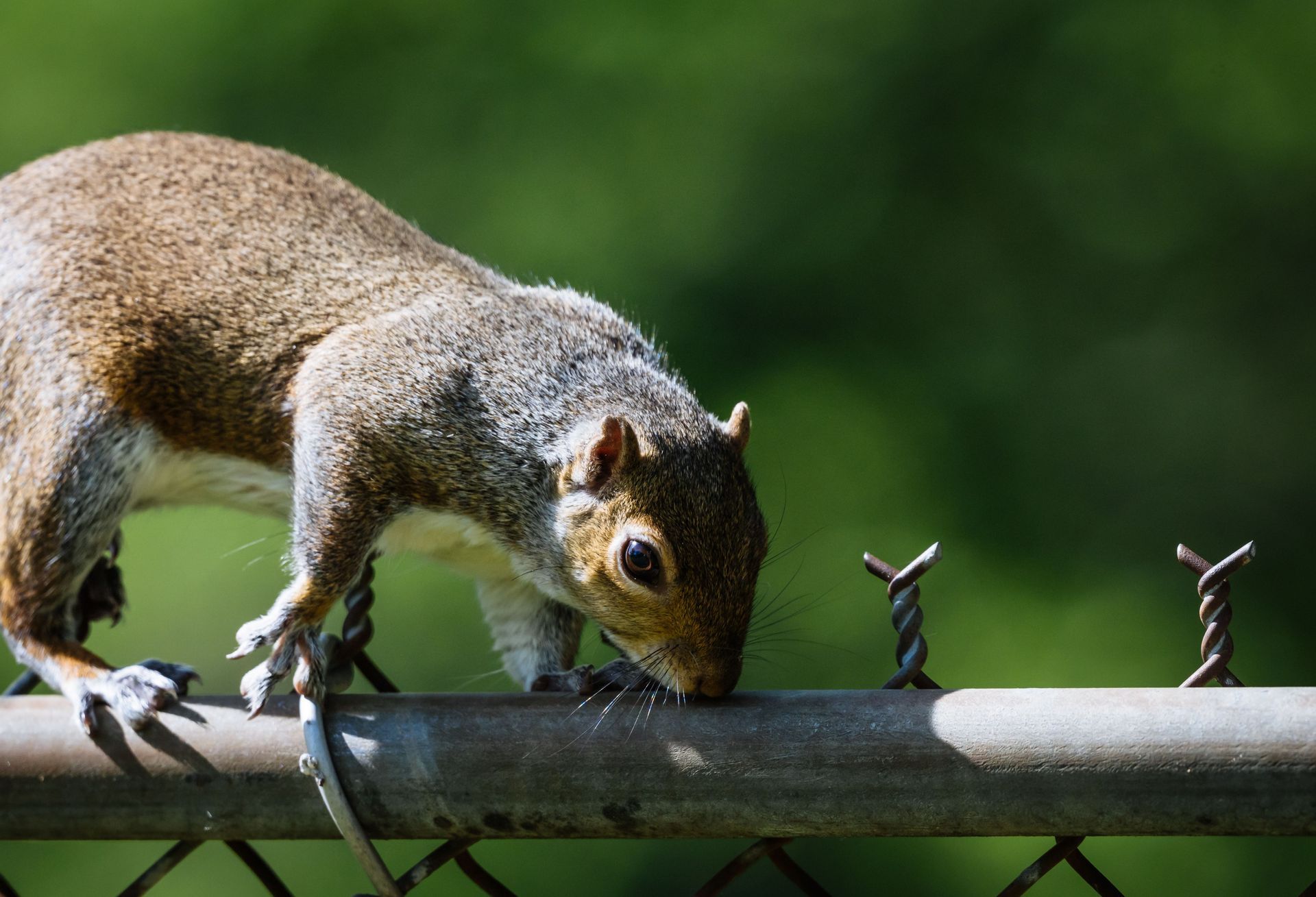
The removal itself resolves the immediate problem; the sealing determines whether the problem stays resolved. Squirrels can gnaw through wood, foam backer rod, standard caulk, and thin plastic mesh—materials that appear to close a gap but don't hold against sustained chewing pressure. Reliant Pest Management uses metal flashing and hardware cloth at sealed openings because those materials present a physical barrier that gnawing cannot defeat. That distinction matters most at the points squirrels favor: the return edge where soffit meets fascia, the corner joints of gable vents, and any gap around a roof penetration where the flashing has lifted.
Once removal and sealing are complete, the attic space no longer carries the noise, odor, or insulation disruption that active squirrel occupation produces. Clients typically notice the absence of ceiling-level movement sounds within days of the work finishing, and any compressed or soiled insulation is identifiable for remediation now that the source of contamination has been stopped. The sealed entry points are visible from the exterior and finished in a way that matches the existing roofline materials rather than leaving exposed mesh or unfinished patches.
Squirrel removal is priced from $600 and covers the full removal and sealing sequence—not the removal alone. That matters because a job that stops at extraction without addressing the entry points is structurally incomplete; the opening that let the first animal in will let the next one in under identical conditions.
What Property Owners Ask About the Work
The questions below focus on how squirrel removal is performed and what the process involves from first assessment through completed sealing.
What materials are used to seal entry points after squirrels are removed?
Metal flashing and hardware cloth are used at verified entry points because squirrels can chew through foam, caulk, and standard mesh—metal presents a barrier that gnawing pressure cannot defeat over time.
How is the removal method chosen for a specific property?
The approach—live trapping, exclusion devices, or a combination—is determined by where the animals are concentrated, how accessible the space is, and whether young are present, since active nesting changes the sequencing of the work.
Why do soffit corners fail mor
Why do soffit corners fail more often than flat soffit panels?
Corner joints are where two vinyl panels meet at an angle, and that seam is held by a single piece of trim rather than a continuous fastened edge; over years of expansion and contraction, that joint opens just enough for a squirrel to get its teeth into and widen.
What happens to insulation that squirrels have damaged or compressed?
Removal and sealing stop further contamination, but insulation remediation is assessed separately based on what the attic inspection reveals—compressed or fouled material is identified during the process so you have a clear picture of what's there.
How do you confirm all entry points are sealed before the job is considered complete?
Each sealed location is cross-referenced against the documented entry points from the inspection, and the exterior is walked after sealing to verify that no gap remains open—the photographic record from the inspection serves as the baseline for that comparison.
Reliant Pest Management also removes squirrels in Apex, Raleigh, and Durham. To review the specific conditions at your property and confirm what the removal and sealing scope will require, connect with Reliant directly to set up an evaluation.
Call Us
Our Location
167 East Chatham St,
Cary, NC